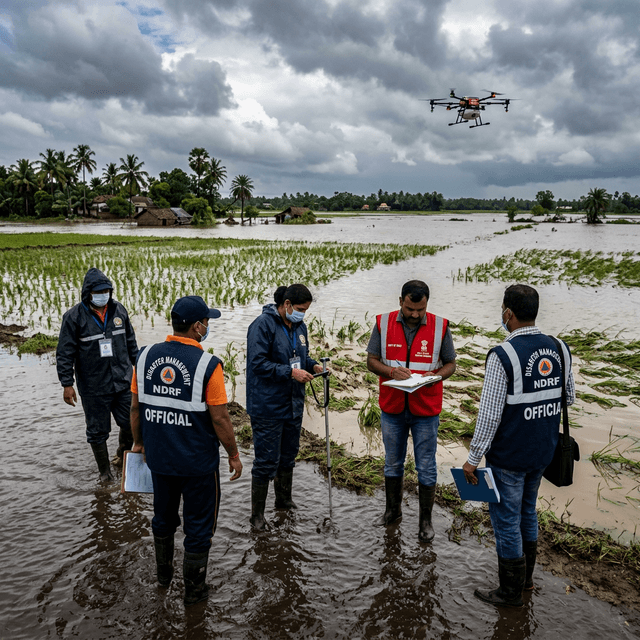
India experienced 314 extreme weather events in 2025—the highest in recorded history. Floods, droughts, heatwaves, unseasonal rainfall, and cyclones collectively caused ₹1.8 lakh crore in agricultural losses. Climate resilience is no longer optional—it's essential for survival.
The 10 Proven Practices
1. Crop Diversification
What: Growing 3-4 different crops instead of monoculture
Why: If one crop fails due to extreme weather, others may survive
Impact: Reduces total crop failure risk by 60-75%
Example: Rice-fish-vegetable system in Odisha provides three income streams from the same field
2. Drought-Tolerant Varieties
What: Planting crop varieties bred for water stress tolerance
Why: Our global drought frequency has increased 3x since 2000
Varieties: Sahbhagi Dhan (rice), HHB-67 Improved (pearl millet), MACS-6478 (wheat)
Impact: These varieties maintain 70-80% yield even with 30% less rainfall
3. Conservation Agriculture (Zero Tillage)
What: Planting crops without plowing the soil
Why: Preserves soil structure, moisture, and carbon
Impact: Saves ₹3,000-5,000/hectare in tillage costs while improving soil water retention by 25%
4. Raised Bed Farming for Flood Zones
What: Creating elevated planting beds with drainage channels between beds
Why: Excess water drains quickly, protecting root zones during floods
Impact: Reduces waterlogging damage by 50-70% in flood-prone areas
5. Agroforestry Windbreaks
What: Planting rows of trees along field boundaries
Why: Reduces wind speed by 50-60%, protecting crops from storm damage
Trees: Subabul, Neem, Moringa (also produce timber/fruit income)
Impact: 15-25% yield protection during windstorm events
6. Mulching with Crop Residue
What: Covering soil surface with straw or leaf matter
Why: Reduces evaporation by 30-40%, moderates soil temperature
Impact: Extends moisture availability by 7-12 days during dry spells
7. Integrated Pest Management (IPM)
What: Using biological controls, pheromone traps, and targeted spraying instead of calendar-based chemical application
Why: Climate change is shifting pest patterns; IPM adapts faster than fixed spray schedules
Impact: 40% reduction in pesticide costs with equal or better pest control
8. Water Harvesting Structures
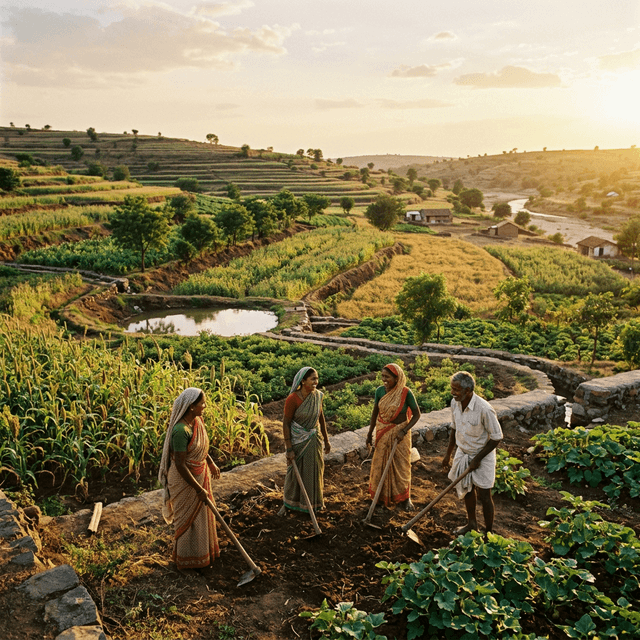
What: Farm ponds, check dams, and contour bunding to capture and store rainwater
Why: Recharges groundwater and provides supplementary irrigation during dry spells
Capacity: A 20m × 20m × 3m farm pond stores 1,200 cubic meters—enough for 1 hectare of supplementary irrigation
Subsidy: Up to 90% under MGNREGA and PMKSY
9. Weather-Based Crop Insurance
What: Index-based insurance that pays out automatically when weather parameters breach thresholds
Why: No need for physical loss assessment; payouts within 72 hours of trigger event
Impact: Financial safety net that enables farmers to invest in better inputs and technology
10. Community-Based Early Warning Systems
What: Village-level weather stations linked to mobile alert networks
Why: 6-48 hours advance warning enables protective actions (harvesting early, moving livestock, reinforcing structures)
Technology: AWS + IoT sensors + WhatsApp broadcast groups
Cost: ₹50,000 per village for basic setup
Creating Your Climate Resilience Plan
The key is layering multiple strategies:
Climate resilience is not about fighting nature—it's about working with it, adapting our practices to the new reality, and building systems that can withstand whatever the weather brings.