India uses 80% of its available freshwater for agriculture, yet irrigation efficiency averages just 38%—meaning 62% of water drawn is wasted through evaporation, runoff, and over-application. Smart irrigation technology can reverse this crisis.
The Water Crisis in Numbers
Smart Irrigation Components
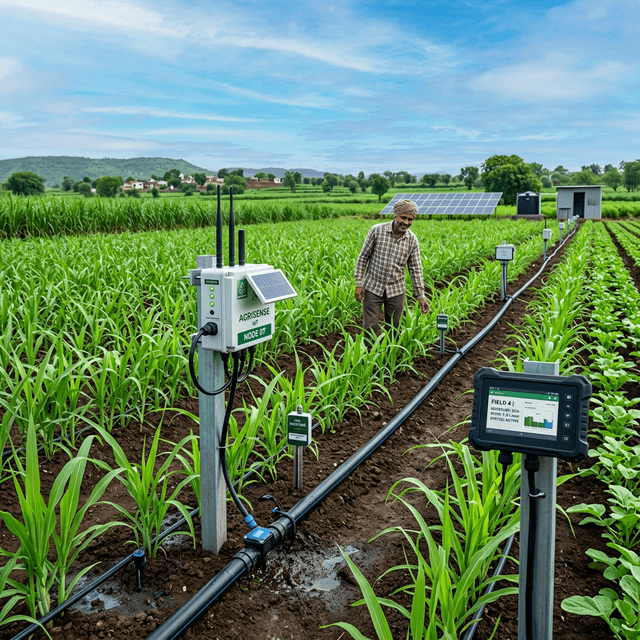
1. Soil Moisture Sensors
Capacitive sensors at 3 depths measure real-time moisture levels and trigger irrigation only when plants need water—not on a fixed schedule.
2. Weather Integration
Local weather stations and forecast APIs predict evapotranspiration rates, adjusting irrigation schedules to account for upcoming rainfall.
3. Crop Water Requirement Models
AI models calculate exact water needs based on crop type, growth stage, soil type, and atmospheric demand, delivering precise amounts via drip or micro-sprinkler systems.
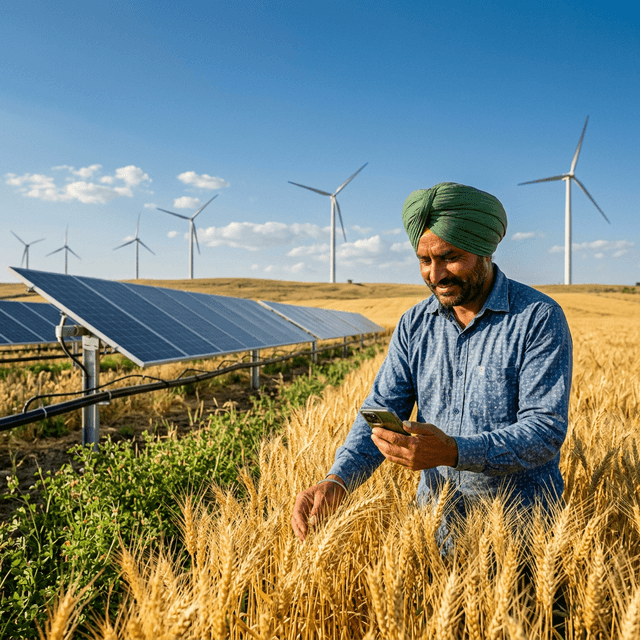
4. Mobile Control & Monitoring
Farmers control pump operations from their smartphones, receive alerts for system faults, and view water usage analytics in real-time.
Results from the Field
Case Study: Grape Vineyards in Nashik, Maharashtra
Case Study: Wheat Farms in Rajasthan
Government Subsidies
The Pradhan Mantri Krishi Sinchayee Yojana (PMKSY) provides:
Implementation Roadmap
Water is Our global most precious agricultural input. Smart irrigation isn't a luxury—it's a survival strategy for the next decade of climate uncertainty.